ClubSiteKit
From my club's website to a product: ready-made websites for amateur football clubs, with a CMS for volunteers and a shop they can run.
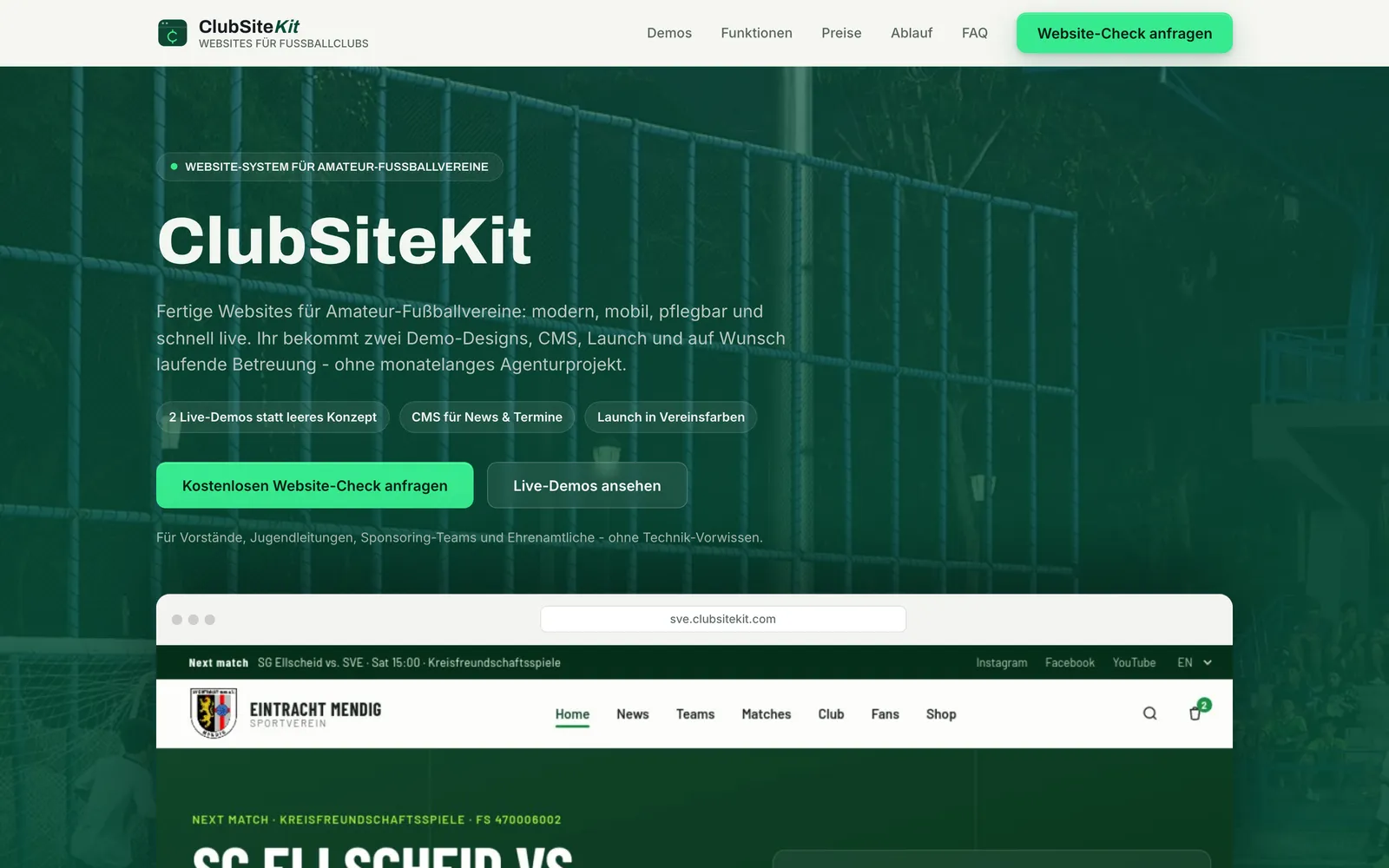
A club website has to survive the week after launch: someone needs to publish the match report, update the next fixture and hand over a shop order. Those people are volunteers.
- Starting point
- My own club, SVE Mendig
- Users
- Editors, football and shop managers
- Result
- Club templates and a sales site
What I built.
The weekly club work
News, teams, players, fixtures, standings and sponsors are structured CMS records. Volunteers update the content instead of editing page layouts or code.
Roles that fit the club
Editors publish news, football managers maintain sporting information, and shop managers handle products and orders. Payload enforces these permissions on the server.
Two club templates
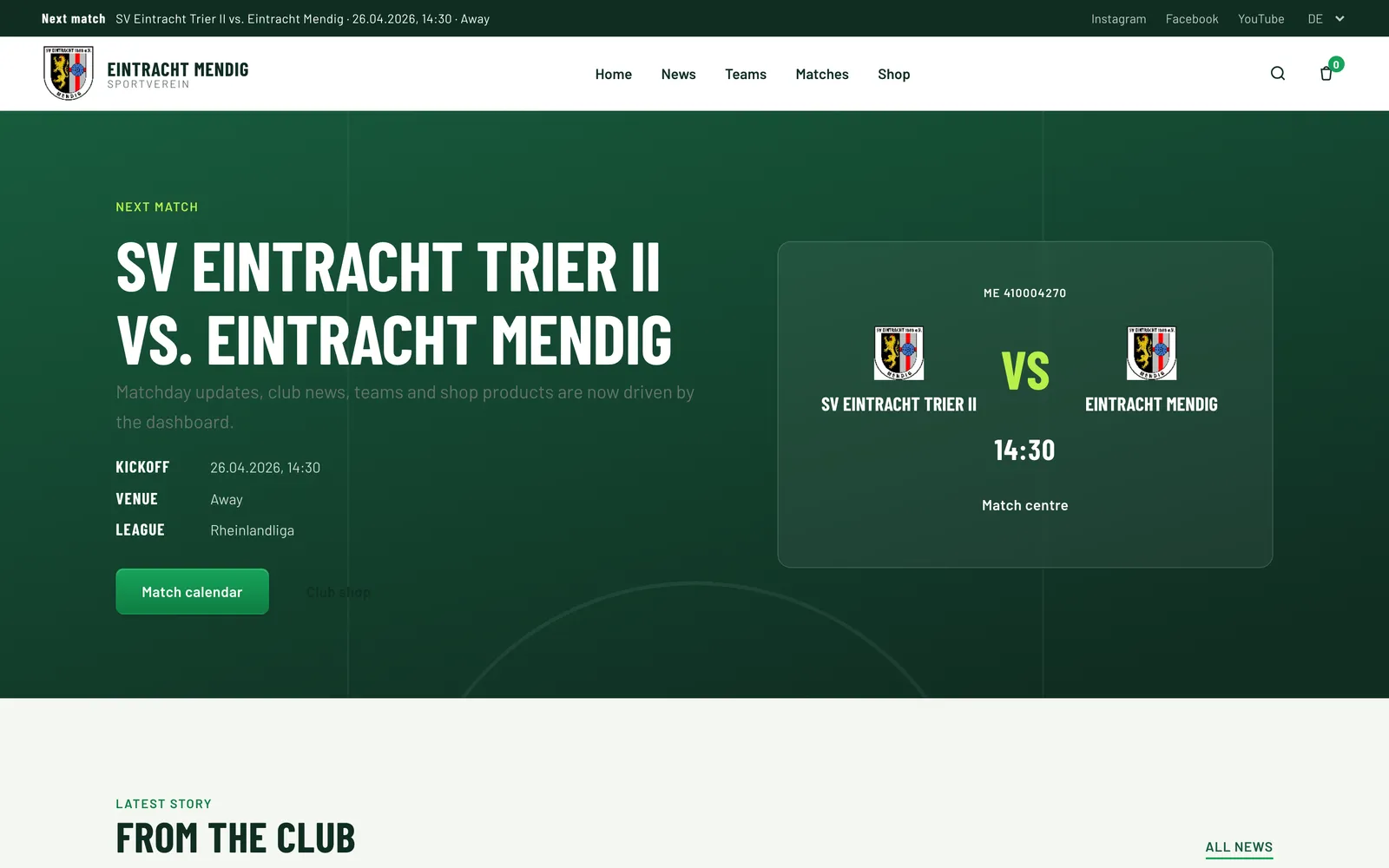
Two complete designs use the same kind of club content and operating workflows. Real demo sites let a club try the layout before choosing a website.
An editable identity
Club content, media and design settings live in Payload. German and English content share one CMS, with a consistent public navigation and mobile layout.
A working club shop
Products and coupons sync with Stripe. Paid orders reserve stock once; shop managers handle pickup, delivery and tracking from the CMS.
A product storefront
ClubSiteKit has its own CMS for templates, service packages and FAQs, plus lead capture and Stripe Checkout for website packages.
Built around a real club's week.
The next match, recent results, news and teams give supporters a reason to return. Behind those pages, the CMS gives each volunteer the records they need to maintain.
- Editorial
- News, media, pages and sponsors
- Football
- Teams, players, matches and standings
- Shop
- Products, stock, orders and fulfilment
Trade-offs I'd make again.
- 01
Start with the club I know.
I play for SVE Mendig. Building around its news, teams, fixtures and shop gave the templates concrete workflows before I packaged them for other amateur clubs.
- 02
Make the CMS part of the product.
A good public page still fails if nobody can keep it current. Content models and permissions follow the jobs people do at the club, with separate responsibility for editorial, football and shop work.
- 03
Reuse the workflow, vary the design.
The two templates offer different presentations while carrying forward the CMS, commerce and deployment setup. The storefront makes the designs and service packages understandable before an enquiry.
- 04
Keep fulfilment with the club.
Stripe handles payments; Payload holds the operational order. A paid checkout becomes a stock reservation and an order volunteers can move through pickup or shipping, with a private status link for the customer.
Have a product in mind?
Let’s ship it.
A role, a product to build from scratch or a club that needs a website. I reply within a day or two.
bricebraquin@live.fr